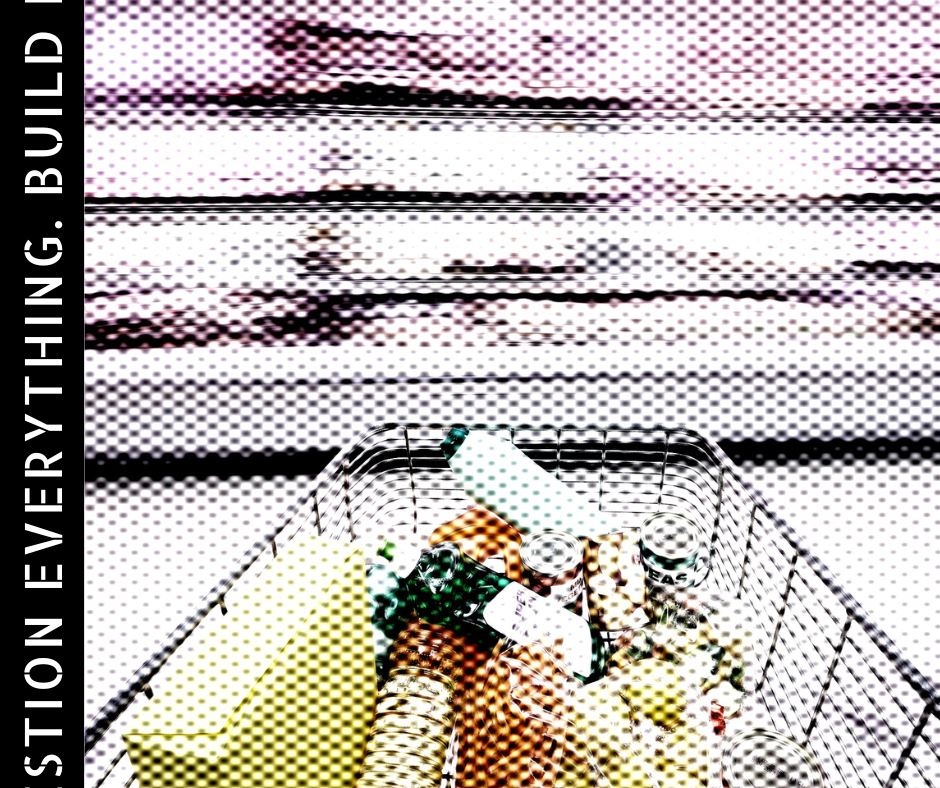
Lately, I’ve had a major epiphany about food and the way society treats it. Food is the ultimate necessity of life, yet somehow, it’s morphed into a mere commodity. It’s something we barter for, spend unnecessarily on, or use as a transactional gift, rather than treating it as a fundamental part of the human experience.
Food shouldn’t be a reward, a luxury, or a daily battle. But for me, and for many others, it often feels exactly like that.
Take my own situation. I rely heavily on the kindness of my mom, who uses her hard-earned money—sometimes even her food stamps—to help feed me. There are times when I’ve had to ask my best friend for grocery money. Gift cards have been a literal lifeline; they represent meals I can stretch, carefully planning out every single dollar to keep myself fed.
Because of this, it frustrates me to see how casually food is treated as a frivolous accessory. We live in a world where people routinely spend money on highly processed, non-essential snacks or candy as gifts or tokens of appreciation, while so many can’t afford basic nourishment. When did food become a product we have to buy into, rather than a natural part of life? Why do we normalize buying a box of heavily processed cereal instead of simply eating an apple straight from nature?
Think about it: food used to be immediately accessible. If you had an apple tree in your backyard or a few chickens running around, you could walk outside and harvest a meal. It was a basic, natural rhythm of life. Over time, however, food became commercialized. We became locked into a system that makes it feel normal to hunt for discounts and deals at a store rather than grow or harvest anything ourselves.
Even the tools we use have shifted. I recently saw a vintage stove that had a cast-iron surface for frying, an oven, and a skillet all in one—a truly resourceful, self-sustaining device. Today, our kitchens are filled with highly specialized gadgets and microwaves, prioritizing speed and convenience over connection. How did we become so distracted by technology and marketing that food became just another product in the marketplace?
So, why did this happen?
- The Industrial Revolution (Late 18th to 19th Century): Advances in manufacturing and transportation led to the growth of factories. People migrated from rural areas to cities to seek work, physically stepping away from their land and local food sources.
- Urbanization and Migration (Late 19th to Mid-20th Century): Global events like WWI and WWII shifted the workforce into factories. This urban migration created a growing societal reliance on processed, mass-produced foods to affordably feed busy, city-dwelling households.
- The Rise of Supermarkets (1920s onwards): Supermarkets put a massive variety of products under one roof, making food commercially accessible but heavily processed. It was cheaper, convenient, and had a longer shelf life—desensitizing us to where our food actually comes from.
Researching this history made me reflect on something deeper than just meals: time. Time lost, and time gained.
I feel a pang of envy when I watch shows like Little House on the Prairie. Not because their lives were easier—they absolutely weren’t—but because their relationship with food feels completely foreign to us now. They didn’t just eat home-cooked meals; they intimately understood the process of them. Butter wasn’t bought; it was churned. Bread wasn’t grabbed from a plastic wrapper on a shelf; it was created from raw ingredients.
What was once a vital survival skill has been reduced to a weekend hobby. And that shift matters.
As I reflect on this transformation, I realize my frustration isn’t just with the system itself—it’s with how I am forced to respond to it. The reality is, I don’t always have access to the food I want to eat.
There are real financial constraints. When resources are limited, I find myself doing what so many do: I go for what’s affordable. Canned tuna, packaged sauces, and processed options that stretch my budget but don’t align with how I truly want to nourish my body.
So when I say I struggle with how food is treated, it’s not coming from entitlement; it comes from acute awareness. We’ve taken something essential to human survival and turned it into a profitable product, a reward system, and a major source of stress. And there is profound tension in knowing that the survival choices I have to make right now do not reflect the life I want to build.
This leaves me with a critical question: How do I build deliberately in the middle of a system I don’t fully agree with?
I can’t simply opt out. I still have to eat, budget, and survive within my current reality. But what I can do is become more intentional. Building deliberately isn’t about perfection or suddenly having an unlimited grocery budget. It’s about awareness first, and then alignment—one decision at a time.
It means asking myself better questions:
- What does nourishment actually mean for me—not just physically, but mentally and emotionally?
- Where can I make small shifts, even within my current limitations?
- Can I prioritize one highly intentional meal a week instead of trying to overhaul everything at once?
- What habits am I reinforcing when I default to convenience over intention, and how can I slowly change that?
Building deliberately looks like:
- Learning one foundational cooking skill at a time.
- Choosing whole foods when possible, without demanding perfection from myself.
- Tracking where my money goes to see if it aligns with my deeper values.
- Separating my survival decisions from my identity, so I don’t shame myself for simply doing what I have to do to eat.
Most importantly, it means refusing to move through life on autopilot.
Once you start asking why—why food became commercialized, why convenience replaced skill, why access became unequal—you can’t unsee it. But the goal isn’t to sit in frustration.
The goal is to respond with intention. To recognize the system, but refuse to be entirely shaped by it. To survive—but also slowly, deliberately, build something different.


